
Understanding NRSC v. FEC
What the new Supreme Court campaign finance ruling means if you’ve ever written a check to a Democrat, the Democratic Party, or a PAC

Please note: Way to Win is not a law firm. The information contained here should not be construed as legal advice, but rather presents a likely shift in the political landscape due to shifts in campaign finance practices. Please consult with a lawyer for individual advice.
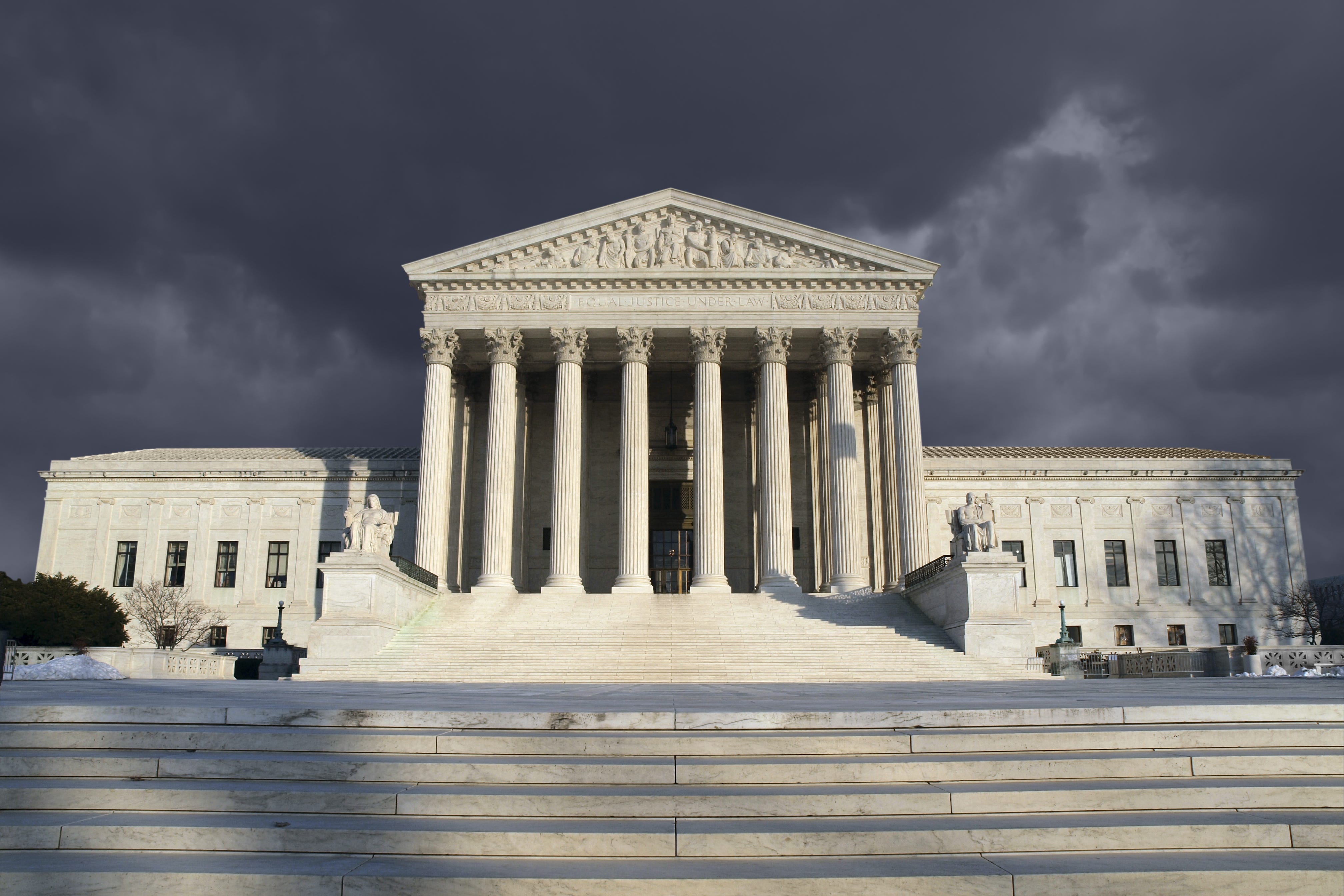
What Just Happened
Because of the Court’s June 30 decision in NRSC v. FEC, national party committees can now spend unlimited amounts of money on races in coordination with candidates. Democrats, their allies, and their donors must consider the implications of this shift, both on the 2026 Midterms and ahead of the 2028 Presidential election.
First, let’s unpack some of the jargon. You likely already know the two most famous national party committees, the DNC and the RNC, and you may have heard of the Democratic Senatorial Campaign Committee (DSCC), the National Republican Senatorial Committee (NRSC), the Democratic Congressional Campaign Committee (DCCC), and the National Republican Congressional Committee (NRCC) as well. There are also countless state-level campaign committees. Any of these committees may join together with candidates to form a Joint Fundraising Committee (JFC). The role of those party committees, and more importantly, how donors interact with them, is the most significant impact of the NRSC ruling.
Before this summer’s SCOTUS drop, the Supreme Court had already established—through a series of decisions going back decades, from Valeo in 1976 to Citizens United in 2011—that it is unmoved by the argument that the government should have an interest in preventing “undue influence by wealthy donors.” These earlier cases established that there were no permissible limits on outside spending as long as it was not coordinated with the candidates. They did place limits on how the party committees and candidates could raise money in coordination. Now, however, this decision establishes that they also don’t care about possible quid pro quo corruption.
Writing for the 6-3 majority, Brett Kavanaugh refused to believe that there is a real risk of quid pro quo corruption in coordinated party expenditures, arguing it is unlikely as long as candidate-specific earmarking is not allowed.
There’s just one problem. Quid pro quo corruption is already happening. We see it affect candidate positions all the time, and it’s why corporations are willing to spend millions of dollars on “Independent Expenditure” campaigns that don’t coordinate with the candidate. Spoiler alert: It’s not out of the goodness of their hearts. For an example, look no further than MAGA Inc, a Trump-aligned Super PAC receiving millions in donations from big tech, crypto, and AI interests. Now, big money can find an outlet even closer to the candidate or elected official—their party itself.
What Are the Limits
The Court did preserve some “limitations,” though it left them mostly toothless:
Corporations and corporate-funded Super PACs still cannot coordinate with candidates or contribute to party committees for spending in coordination with the candidates.
No donations may be explicitly earmarked for specific candidates (ie. saying “I am giving this $10,000 to the DSCC to help elect James Talarico”).
There is still a cap on individual donations to each state ($10,000) and national party committees($44,300), but within Joint Fundraising Committees, party committees can move money freely between one another. We’ll say more on this later.
What Could This Mean
Historically, in Presidential cycles, there has often been a single ‘blessed’ IE group that moves huge amounts of money independently from big Senate or Presidential campaigns, but pretty much in lockstep with them. In 2024, this was how Democrats spent almost a billion dollars. But not being able to coordinate directly does create a distinct disadvantage. The NRSC is already ending its IE spending arm in anticipation of moving that money through the Republican Party instead. While a few limited federal campaign finance limits will still apply, the Party will be in a position to create joint agreements or JFCs with any number of committees and candidates and increase their number of contributions exponentially.
For anyone who has ever written a check to a group in defense of democracy, freedom, and/or civil rights—from Black PAC to Planned Parenthood PAC, to VoteVets PAC—the moves the GOP is making to consolidate their coordination must be a warning sign. For Big D and small d democrats alike, understanding and leveraging the Party as a vehicle to control money and strategy is now more important than it has been at any point since Citizens United. The NRSC v. FEC decision significantly levels the playing field between parties and PACs.
Of course, that’s not to say that PACs will (or should) fade into the background now. We especially need the voices of groups designed to advocate for clean air, reproductive freedoms, and other policy that makes American lives better. Way to Win encourages members to support Way to Lead PAC, one of those important voices right now as it is one of the few groups electing a young bench to confront and challenge GOP domination in the fastest growing part of the nation—the South and Southwest.
One of the advantages parties gain is that their coordinated media spending is now both unlimited and entitled to the lowest possible rates for broadcast TV slots, as has traditionally been reserved for the candidates. That will mean both more broadcast TV political ads (believe it or not, that’s possible) and more expensive airtime for everyone else.
This decision opens up a giant loophole for massive amounts of money to move in coordination with candidates via JFCs. Some pundits have tried to handwave away the importance of the decision, arguing that the $44k limit makes it insignificant, but the rise of JFCs makes that patently untrue. Money pooled between party committees is uncapped, meaning a big enough JFC can spend nearly unlimited coordinated money.
Because of that, there is absolutely nothing stopping a candidate from directing a donor to give hundreds of thousands to their party’s JFC and the party committee then spending it all in coordination with that candidate, as long as the funds are not explicitly earmarked for them. (This is in line with the court’s approach to corruption in other contexts, from IE PACs to racial gerrymandering—as long as no one is recorded saying “Here is a bribe I am offering you in exchange for this specific favor,” they seem to believe everything is above board.
What Do We Do Now
To be absolutely clear, this is bad for America, and will lead to an increase in campaign finance corruption and influence in our elections by oligarchs.
However, there is a possibility for some good. We all saw the drawbacks of a relatively unaccountable IE doing most of the spending in 2024. Our Party is at least a bit more democratic. But this power shift makes it all the more important that we push the Democratic Party towards strength and commitment to our multiracial, working-class coalition, and toward greater innovation in strategies and tactics. If we allow the Party to sit in its comfort zone while it becomes an unrivaled candidate kingmaker, the consequences could be disastrous.
Last year, we supported Ben Wikler in the DNC Chair race, but the election received too little attention too late, and we’ve all seen the consequences. We can’t afford to make that mistake again. The Democratic Party desperately needs change right now, but it is also in a position where most DNC members and party officials recognize that need for change. The old guard, horse-traders aren’t going to be running the show for much longer. The question is: who’s next?
Way to Win has been working to educate the Party over the past year and a half to make sure we learn from the mistakes of 2024 and develop more effective cultural narratives that can counter the Republican messages that so often dominate national discourse. The Republican moves that have already been made to dissolve some of their IE work show how on top of this situation they already are, and we need to be as well if we’re going to compete.
We also have to leap into action to make sure that the Democratic Party’s broadcast TV and digital ad programs are as effective as possible—and we are the people best positioned to do that. We are having conversations now about how to implement our award-winning ad testing, targeting, and distribution strategies in coordination with/support of the Party’s efforts, but we need your help.
If you want to help us expand and secure the foothold of the grassroots and our pro-working-class, economic populist movement inside the Party, please consider becoming a member of Way to Win today. This is the moment for our movement to take control, not get locked out. Thank you for staying in this fight with us!